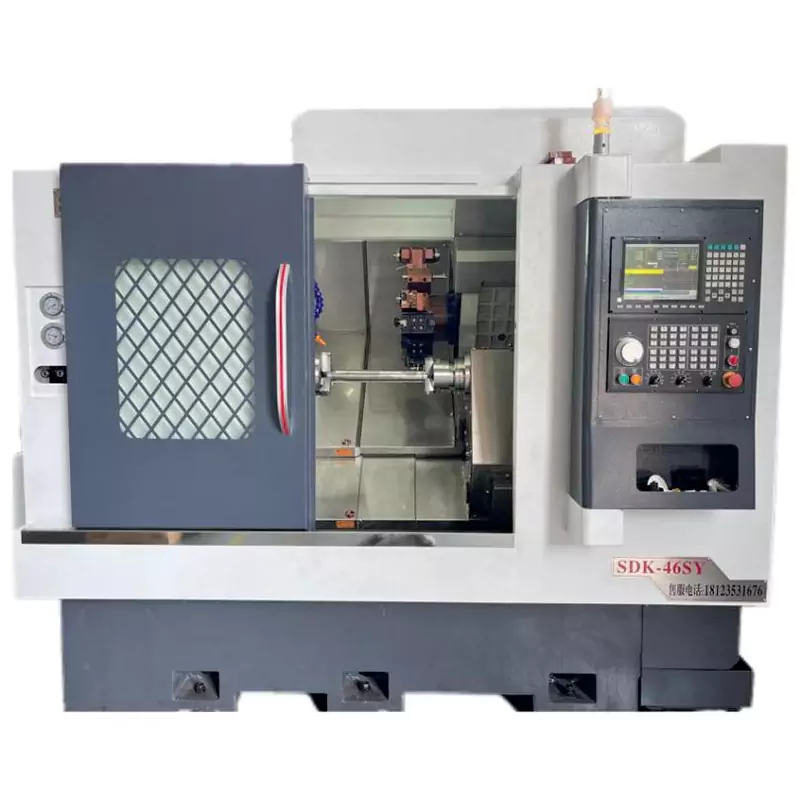
1. Introduction to Double Spindle CNC Machine Tools
In today’s highly competitive manufacturing environment, efficiency is no longer optional—it is essential. Double Spindle CNC Machine Tools are advanced machining systems designed with two independent or synchronized spindles that operate simultaneously. This structure allows manufacturers to perform multiple machining operations in parallel, dramatically increasing output without requiring additional floor space or manpower.
Unlike traditional single-spindle machines that process one workpiece at a time, double spindle systems are engineered for high-volume production scenarios where precision and speed must coexist. These machines are widely used in industries where tight tolerances and mass production intersect, making them a cornerstone of modern smart factories.
2. Working Principle and Core Architecture
The working principle of Double Spindle CNC Machine Tools is based on synchronized or independent dual-spindle operation. Each spindle can hold a cutting tool or workpiece, enabling simultaneous machining processes such as drilling, milling, turning, and finishing.
At the core of the system are several key components:
-
Dual Spindle Units: Allow simultaneous machining or mirrored operations.
-
CNC Control System: Coordinates movement, tool paths, and spindle synchronization.
-
High-Precision Linear Guides: Ensure smooth, accurate motion across axes.
-
Automatic Tool Changer (ATC): Reduces downtime between operations.
-
Rigid Machine Bed: Enhances stability and reduces vibration during high-speed cutting.
The combination of these components allows manufacturers to achieve high-speed, high-accuracy production with minimal human intervention.
3. Key Advantages in Modern Manufacturing
Double Spindle CNC Machine Tools provide a wide range of operational and economic benefits that make them highly attractive for industrial use.
|
Advantage
|
Description
|
Impact on Production
|
|
Higher Productivity
|
Two spindles work simultaneously on one or two parts
|
Up to 40–70% faster production cycles
|
|
Reduced Labor Cost
|
Automation reduces manual intervention
|
Lower operational expenses
|
|
Improved Precision
|
Synchronized machining ensures consistency
|
Higher quality output with less error
|
|
Space Efficiency
|
Two spindles in one machine footprint
|
Optimized factory layout
|
|
Shorter Lead Time
|
Parallel processing reduces production delays
|
Faster order fulfillment
|
These advantages make double spindle systems particularly valuable in industries facing high demand and strict delivery timelines.
4. Industrial Applications and Use Cases
Double Spindle CNC Machine Tools are widely adopted across multiple industries due to their flexibility and efficiency.
-
Automotive Industry: Engine components, transmission parts, brake systems
-
Aerospace Industry: Lightweight structural parts requiring high precision
-
Mold and Die Manufacturing: Complex cavity machining and surface finishing
-
Medical Equipment: Surgical instruments and implant components
-
Electronics Industry: Precision housings and micro components
In these sectors, production speed and dimensional accuracy directly influence profitability and competitiveness. Double spindle systems help bridge that gap effectively.
5. Single Spindle vs Double Spindle CNC Machines
Understanding the differences between single spindle and double spindle CNC machines is essential when selecting the right solution.
|
Feature
|
Single Spindle CNC
|
Double Spindle CNC
|
|
Production Speed
|
Moderate
|
High (parallel machining)
|
|
Machine Cost
|
Lower
|
Higher initial investment
|
|
Efficiency
|
Sequential operations
|
Simultaneous operations
|
|
Maintenance
|
Simpler
|
More advanced maintenance required
|
|
Best Use Case
|
Low to medium production volume
|
High-volume industrial production
|
While single spindle machines are suitable for smaller operations, double spindle CNC machines are designed for scaling production and improving long-term efficiency.
6. How to Choose the Right Machine
Selecting the right Double Spindle CNC Machine Tools requires careful evaluation of production requirements and technical specifications.
-
Material Type: Consider whether you are machining aluminum, steel, or composite materials.
-
Production Volume: High-volume production benefits most from dual spindle systems.
-
Precision Requirements: Ensure machine tolerance matches product specifications.
-
Control System: Advanced CNC controllers improve automation efficiency.
-
After-Sales Support: Reliable technical service ensures long-term stability.
Choosing the correct configuration helps maximize return on investment and ensures stable production performance.
7. Common Challenges and Solutions
Despite their advantages, double spindle CNC machines come with certain operational challenges.
-
Synchronization Complexity: Requires advanced CNC programming and calibration.
-
Higher Initial Investment: Cost is higher compared to standard machines.
-
Operator Skill Requirement: Skilled technicians are necessary for optimal performance.
However, these challenges can be managed through proper training, preventive maintenance, and collaboration with experienced manufacturers.
8. Future Trends in Double Spindle CNC Technology
The evolution of Double Spindle CNC Machine Tools is closely tied to Industry 4.0 and smart manufacturing technologies. Future developments are expected to include:
-
AI-based machining optimization for real-time adjustments
-
IoT-enabled predictive maintenance systems
-
Hybrid machines combining additive and subtractive manufacturing
-
Enhanced energy efficiency systems
These innovations will further improve productivity while reducing operational costs and environmental impact.
9. Maintenance and Operational Best Practices
Proper maintenance ensures long-term reliability and precision of double spindle CNC machines.
-
Regular lubrication of spindle bearings
-
Frequent calibration of CNC control systems
-
Monitoring tool wear and replacement cycles
-
Ensuring clean and stable operating environments
A structured maintenance schedule not only improves machine lifespan but also reduces unexpected downtime.
10. Frequently Asked Questions (FAQ)
Q1: What is the main benefit of double spindle CNC machines?
A1: The main benefit is increased productivity through simultaneous machining operations.
Q2: Are double spindle machines suitable for small factories?
A2: They are best suited for medium to large-scale production environments due to their cost and complexity.
Q3: Can both spindles operate independently?
A3: Yes, many modern machines allow independent or synchronized operation depending on production needs.
Q4: How difficult is it to operate a double spindle CNC machine?
A4: With proper training and modern CNC interfaces, operation becomes manageable for skilled technicians.
Q5: What industries benefit most?
A5: Automotive, aerospace, mold manufacturing, and electronics industries benefit significantly.
11. Conclusion and Industry Outlook
Double Spindle CNC Machine Tools represent a significant leap forward in machining technology. By combining speed, precision, and automation, they allow manufacturers to meet increasing global demand while maintaining strict quality standards. As industries continue to evolve toward smart manufacturing systems, these machines will play an even more critical role in shaping the future of production efficiency.
From small component production to complex industrial parts, their versatility and performance make them a strategic investment for forward-thinking manufacturers.
Guangdong Shadick CNC Technology Co., Ltd. continues to focus on delivering advanced CNC solutions that support high-efficiency manufacturing and precision engineering needs across global industries.
Contact us today to learn more about our Double Spindle CNC Machine Tools and discover how we can help upgrade your production capabilities, improve efficiency, and reduce operational costs.